Author: Sarah Cole

On a mission to fuel the next generation of world-changing companies in consumer, enterprise, marketplaces, health-tech, and more. Formerly of Stanford, and University of Wisconsin. I love tacos and strategy board games.

What Is A Shampoo Bar, How To Use It And Why Use Shampoo Bar?

The popularity of the shampoo bar commonly used skincare product is skyrocketing and with good reason! Let’s see what are these hair cleaning bars, how are they manufactured and why convert to them.
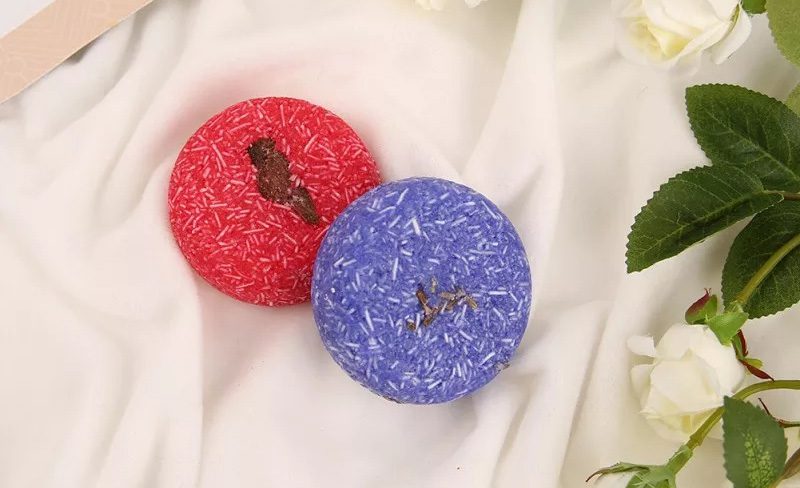

The manufacturing process of the shampoo bar

The production process of our shampoo bars should not be confused with the cold saponification process. Our shampoo bars do not come from cold saponification, as we do for our soaps with rice bran oil. Our research and our trials let us conclude that a cold shampoo is not ideal for the balance of the hair (“griche” to the touch and duller aspect). Instead, we use a mix of ingredients to make our shampoo bars. This mixture forms a paste that we compact and let dry a few days before putting them on our shelves. What Is A Shampoo Bar, How To Use It And Why Use Shampoo Bar? purcorganics shampoobar6  

The ingredients:

Surfactants

Sodium coco sulfate (SCS) and sodium cocoyl isethionate (SCI) are surfactants (washing agents) of plant origin, derived from the fatty acids of coconut oil. It is the main raw material used in the manufacture of our shampoo bars. They come in the form of small white granules (the small seeds in your bar). These basic ingredients provide excellent foaming and cleansing power. They can make shampoos in solid form can add oils and butter without weighing your hair. So do not be afraid of names that seem complicated in the list of ingredients: these ingredients are simple, soft and biodegradable.

Vegetable oils and butter

All our shampoo bars contain vegetable oils to nourish the hair. Coconut and hemp oils nourish, protect and strengthen the hair while providing flexibility and shine. Jojoba oil acts as a seborrheic regulator, that is to say, it helps to control the excess of sebum of oily hair and regulates that of dry and brittle hair. The essential fatty acids contained in the apricot kernel oil strengthen and nourish the hair fiber and help fight against hair loss. Of course, we added our precious rice bran oil (vitamin E) as well as shea butter to nourish your mane and protect it from external aggressions.

Natural additives

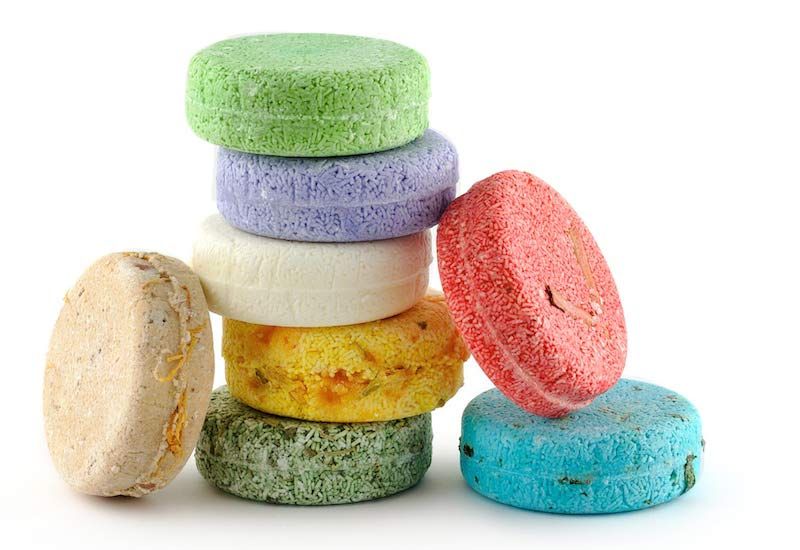
Selected according to their properties, clays have been added in our shampoo bars and act as a hair mask. You will find Kamouraska gray clay in our shampoo for oily hair, white clay in nourishing clay and pink clay (a mixture of white clay and red clay ) in our shampoo for sensitive scalp. Our bars are colorless: it is the clays that give them their unique color. Although our bar shampoos are not presented for their detangling action, Shikakai powder (dried fruit powder) acts in this way. Naturally rich in saponin, this powder gently cleanses the hair and the sensitive scalp. The added essential oils are carefully selected for their specific properties attributed to each of our shampoos. Finally, to preserve the finished product, we add a hint of grapefruit seed extract. Note: you will notice that the list of ingredients on our labels is written in INCI nomenclature. To help you better understand this language, you will find the list of ingredients for each product in French, in their respective file on our online store.

Why use the shampoo bar?

Shampoo bars are in great demand. It’s not just a trend, it’s an emergency. The urgency of taking care of the planet by reducing our ecological footprint, making us aware of overpack and consuming in a more responsible way. But we know that you are already well informed and above all convinced! Ecological > Completed plastic bottles! According to information circulating on the Net, shampoo bars could avoid the use of more than 500 million single-use plastic bottles! With our shampoo bars, Quai des Bulles is taking a step towards reducing packaging *. In addition, the ingredients used are from plant and biodegradable sources. Economical > Its long service life makes it an economical care product. Its solid form makes it possible to take only the quantity necessary during the shampoo. Obviously, its duration of use varies according to the washing frequencies and the length of the hair. From our side, we do not yet know exactly how many shampoos we can do with a bar, because we never finish finishing the one we started! Convenient > It’s compact, lightweight design is convenient for travel and travel. No risk of leakage of a bottle (that’s flat in a suitcase …). What Is A Shampoo Bar, How To Use It And Why Use Shampoo Bar? All Shampoo Review Shine Shampoo 1  
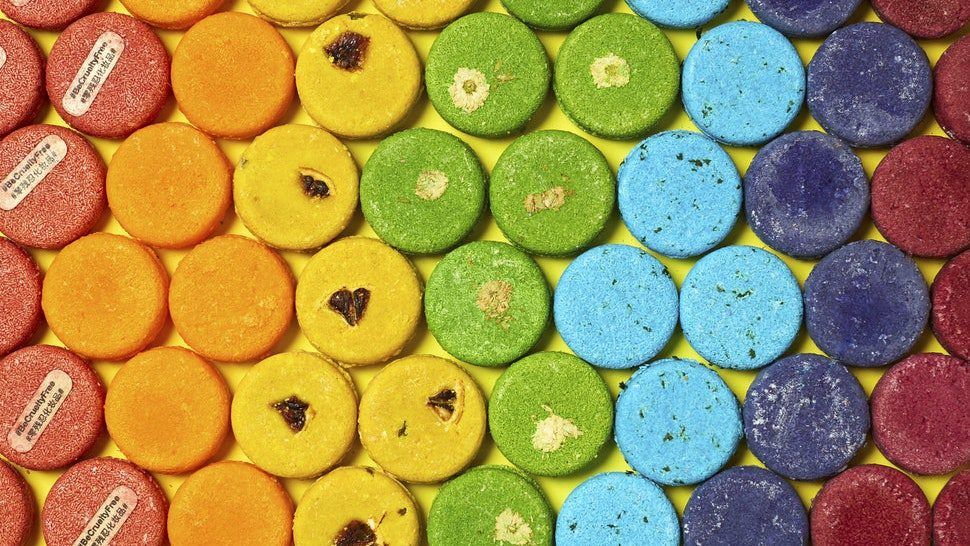
The use of a shampoo bar

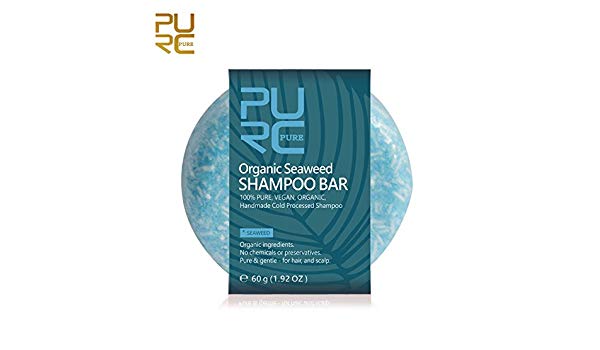
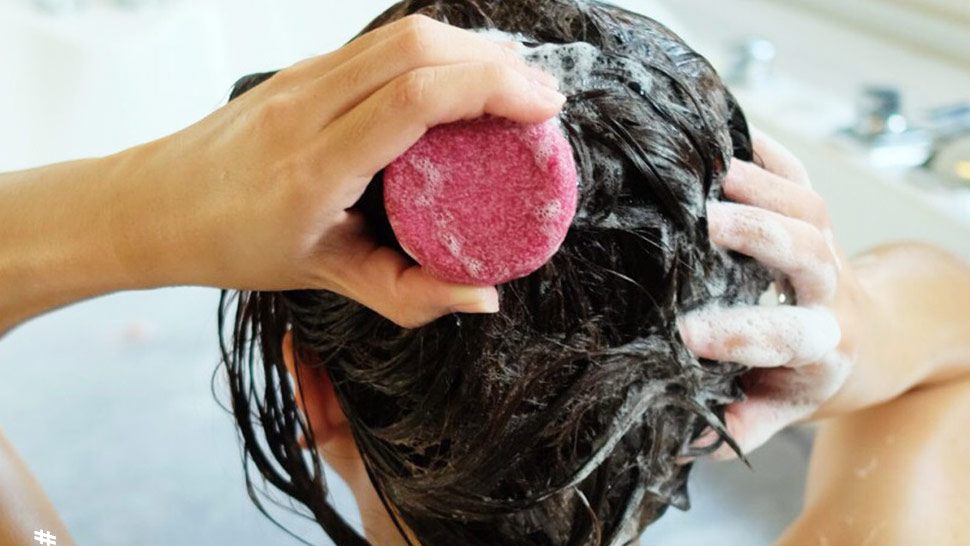
The use of a shampoo bar is as easy as hello! Just go directly on wet hair (3 or 4 shots are enough!) To apply a little shampoo. Lather with your fingers and gently massage the scalp. Be sure to rinse thoroughly. You can repeat as needed. Drain the shampoo well and keep it in a dry place (not under the spray of the shower!). PURC Organics are now offering shampoo bars in minimalist packaging. Shop now!

How To Make Your Own Home-Made Shampoo Bars

Why do I introduce you to a dry shampoo bar recipe when you can buy a big bottle of $ 8 shampoo at the pharmacy? Beyond the fact that it’s much easier to do than you think, I have 2 really concrete reasons.

Recently I wondered how I could put mine on a daily basis to help the planet survive a little longer … Starting with reducing my consumption of products contained in a plastic container was, without a shadow of a doubt, one of the simplest gestures to make, which could make a big difference for the planet! Because it is a fact, our individual and collective consumption of plastic is excessive and has catastrophic consequences for the planet!

How To Make Your Own Home-Made Shampoo Bars Shampoo pollutiion feature image

Good plastics have excellent potential for recovery. But it is only 10% of plastic consumed that recover well and that is not to mention all the recoverable plastic, which is thrown in the drain. Have you heard about the 6th continent (there are some who say it’s the 7th, but I think they had to fail their high school geography course)?

I present to you the continent of waste:

This is NOT a dump. It is literally a pool of plastic waste floating and growing permanently in the Pacific Ocean. It is 3.43 million km². This is a little more than twice the size of Quebec in full. 

Sometimes you have to be brewed a little! But it’s with a lot of love that I tell you that! So a single shampoo bar equals 3 medium bottles of shampoo. If we put ourselves all, we could avoid consuming around 552 million bottles of plastic worldwide. It’s not anything. Having said that, I do not want to discredit all the companies that use plastic, some of them do it in an eco-responsible way It was the number one reason.

Have you ever wondered what kind of products are in your shampoo? Probably not, so I’ll tell you: 1,4-Dioxane, Formaldehyde, Nitrosamines, Polysorbate, Cocamidopropyl Betaine, Diazolidinyl Urea, to name a few. Well known words, that we hear every day right? #NOT. What-are-all-the-ingredients-with-a-Box-potential carcinogen. I named only a few of the dangerous chemical ingredients. The list is FREAKING-long !! In short, it is certainly not healthy ingredients for your hair, your skin, and the planet.

I hope so far have convinced you to slightly review your habits by opting for something a little greener and less damaging to your health!

How To Make Your Own Home-Made Shampoo Bars 51tzYf9v0hL. SR600315 PIWhiteStripBottomLeft035 SCLZZZZZZZ 1

What better way to start by creating your own shampoo bars !? 

Ingredients:

  • 2/3 (170ml) cup of olive oil
  • 2/3 (170 ml) cup of coconut oil
  • 2/3 (170ml) cup of grapeseed oil
  • 1 C. castor oil (OR beaver oil) OR any other oil (avocado, jojoba, shea butter, etc.)
  • 3/4 cup distilled water
  • 1/4 cup of sodium hydroxide, caustic soda or lye (these are all synonyms) **
  • 1 to 2 tbsp. of essential oils that go as follows in my recipe: 1/2 tsp. rosemary oil; 1 1/2 tsp. tablespoon pink (or white) grapefruit oil; 1/2 c. tablespoons of Atlas cedar oil (oils are optional and can be combined to taste).
  • liquid soap dye (full optional, it’s just for the eye)

** Sodium hydroxide or Lye in English can be found in soap creation stores or online, especially on amazon. It is not a chemical ingredient, it is a natural material. By cons it is caustic, that is to say, it can burn tissue or skin when mixed with water, simply because it becomes very hot. Once cooled it is safe! These are very simple chemistry! It is neutralized with vinegar.

Material: 

  • measuring cups and spoons
  • a small bowl or measuring cup made of glass or aluminum (kind of hen)
  • a large bowl going to the microwave
  • spoon
  • hand blender 
  • protection against burning when sodium hydroxide is heated (dishwashing gloves, protective glasses, vinegar to neutralize in case of an accident)
  • candy thermometer
  • silicone mold

** Be sure to clean the equipment, ideally put in the dishwasher if it is reused in the kitchen afterward.

Preparation: 

In a large microwavable bowl, melt the coconut oil until it is completely melted (about 30 to 45 seconds). Then add the following oils: olive oil and grapeseed oil (do not add castor oil or other selected oil and essential oils, they will be used later). Then set aside.

Put on the protections. Take the animals out of the room and ask the children to listen to Peppa pig for the next 10 minutes. In a second small bowl (or large glass measuring cup) pour the distilled water. It is important to respect the order of this step to avoid burns! Measure 1/4 cup of sodium hydroxide and pour it slowly (to avoid splashing) into the bowl containing the distilled water, stirring gently with a spoon, until the water becomes clear again. Sodium hydroxide will release a “smoke” for a few seconds, which could cause coughing. It’s not dangerous, but trying to avoid putting your face above the bowl would be better. Deposit the candy thermometer in the sodium hydroxide mixture,

Then place the thermometer in the bowl containing the oils and check the temperature. If necessary, heat the oils in the microwave (5 to 10 seconds at a time) to 75 ° F. Once this temperature is reached, then put the sodium hydroxide mixture in the bowl containing the oils and mix with the mixer. This step can be rather long (5 to 10 minutes) since it is necessary to mix without stopping until obtaining what is called the trace (what I will call the pudding). If you’re fine, your mix should have the consistency and appearance of vanilla pudding. Once this consistency is reached, it’s time to add your essential oils, the dye and the last one. oil of your choice (castor oil in my recipe).

Let stand for 24 hours (or until the bars are completely frozen), then gently remove from their mold. Then put the shampoo bars on a plate (or plate) and let dry for 4 weeks by turning them once a week. Yes, I know. It’s long to wait 4 weeks, but it’s to allow the water to completely evaporate and this step is worth it to have a bar of shampoo that lasts longer!

How to use a dry shampoo bar: 

How To Make Your Own Home-Made Shampoo Bars BARnm 1

Pre-foam the shampoo bar in your hands. Then massage the scalp with the shampoo bar on your wet hair, starting from the root to the tip. Rinse well. If hair looks waxy, rinse with apple cider vinegar. It’s normal, it gets rid of toxins and all the chemicals stuck to your hair for a long time! This will restore a healthy PH for your hair and add shine. This step can be repeated with each wash, as it is 100% natural. For example, you could prepare a pot of apple cider vinegar, which you can keep near your bath. The smell does not stay on the hair.

If you can also want to make the change for our planet and want to use good organic hair-care products, shop now on PURC Organics.